For centuries, Greenland’s economy and culture have relied on the sea. Today, that connection faces new challenges: warming waters, fragile ecosystems, and a global call for sustainable food systems. In this context, Royal Greenland, the country’s largest seafood company, has become a key example of how a traditional industry can evolve to meet modern environmental standards while continuing to support local communities.
Certified sustainability in Arctic waters
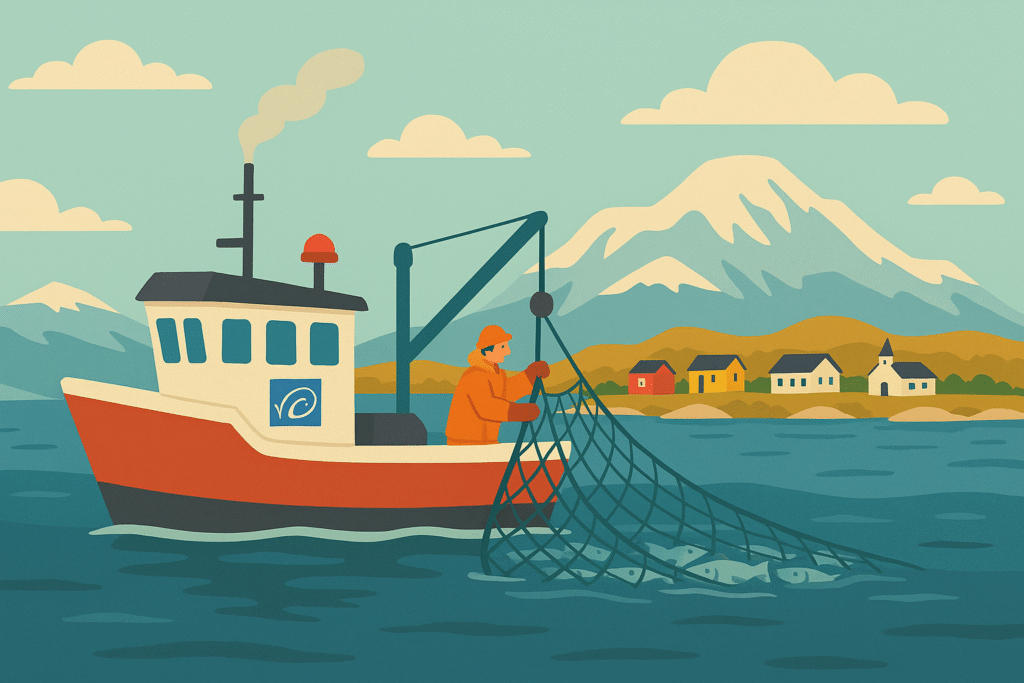
In 2022, Royal Greenland’s offshore fishery for Greenland halibut was re-certified by the Marine Stewardship Council (MSC). The certification ensures that the fishery operates under strict criteria for sustainable stock management, minimal ecosystem impact, and transparent traceability. It is one of the northernmost MSC-certified fisheries in the world and a crucial step toward keeping Arctic seafood both profitable and responsible.
The certification also motivates continuous improvement. Every five years, fisheries must demonstrate measurable progress in by-catch reduction, gear selectivity, and long-term stock assessment. For Greenland, where the fishing sector represents a large part of the economy, this process has become a roadmap for balancing livelihoods and conservation.
Local partnerships for responsible fishing
Behind the certification lies a network of cooperation among fishers, scientists, and public institutions. Royal Greenland collaborates closely with the Government of Greenland, the Ministry of Fisheries and Hunting, and local communities through initiatives such as Sustainable Fisheries Greenland.
These partnerships ensure that scientific data guide policy decisions, while local knowledge remains central to the management of marine resources.
In coastal areas like Upernavik and Uummannaq, the company also supports Fishery Improvement Projects (FIPs)—voluntary programmes that help small-scale fishers align with international sustainability standards. Actions include adjusting mesh sizes, collecting lost gear, and testing selective fishing methods to reduce ecosystem pressure.
Economic value and community empowerment
Sustainable certification is not only about protecting fish stocks—it also strengthens Greenland’s communities. Regulations require part of the catch to be landed and processed locally, generating stable jobs and industrial opportunities in remote towns. Royal Greenland reports that nearly 90 percent of each fish is now utilised, turning what used to be waste into valuable by-products for local and export markets.
By investing in modern processing plants and energy-efficient vessels, the company contributes to both economic diversification and climate goals. It has also committed to ensuring that at least 75 percent of its raw materials come from certified sustainable sources by 2030, reinforcing the link between local empowerment and global responsibility.
Learning and adapting to climate change
The Arctic ecosystem is changing faster than almost anywhere else on Earth. Scientific studies on Greenland’s offshore halibut fishery highlight the need for continuous adaptation to shifting ocean temperatures and species migration patterns. The MSC framework encourages this adaptive management, making fisheries more resilient to future uncertainty.
Royal Greenland’s journey shows that sustainability is not a fixed destination but an ongoing process of learning, dialogue, and innovation. It also demonstrates that traditional industries—when guided by science and community engagement—can lead meaningful climate action in the world’s most vulnerable regions.
From Ocean to Action
Sustainable seafood is a shared responsibility.
As consumers and citizens, we can:
- Choose products carrying verified sustainability labels such as MSC.
- Support organisations that promote transparency and ocean stewardship.
- Share stories like this one to inspire responsible practices in other sectors.
The Arctic’s future depends on choices made today—by industries, by policymakers, and by all of us who benefit from its waters.by industries, by policymakers, and by all of us who benefit from its waters.
Sources:
Royal Greenland A/S – Offshore fishery for Greenland halibut recertified by the MSC (2022) — https://www.royalgreenland.com/en-US/a/offshore-fishery-for-greenland-halibut-recertified-by-the-msc-en-US
Royal Greenland A/S – Third party certifications — https://www.royalgreenland.com/en-US/third-party-certifications-en-US
Royal Greenland A/S – Responsible fishing — https://www.royalgreenland.com/en-US/responsible-fishing-en-US
ScienceDirect – Greenland’s offshore Greenland halibut fishery and role of certification (2020) — https://www.sciencedirect.com/science/article/pii/S0308597X20302736