In this context, education on sustainability plays a key role in shaping future leaders and active citizens who, through their behavior, will contribute to environmental protection. In Croatia, green schools are increasingly becoming part of the educational system, allowing children not only to understand ecological challenges but also to actively participate in solving them.
Green Schools in Croatia: Integrating Ecological Principles
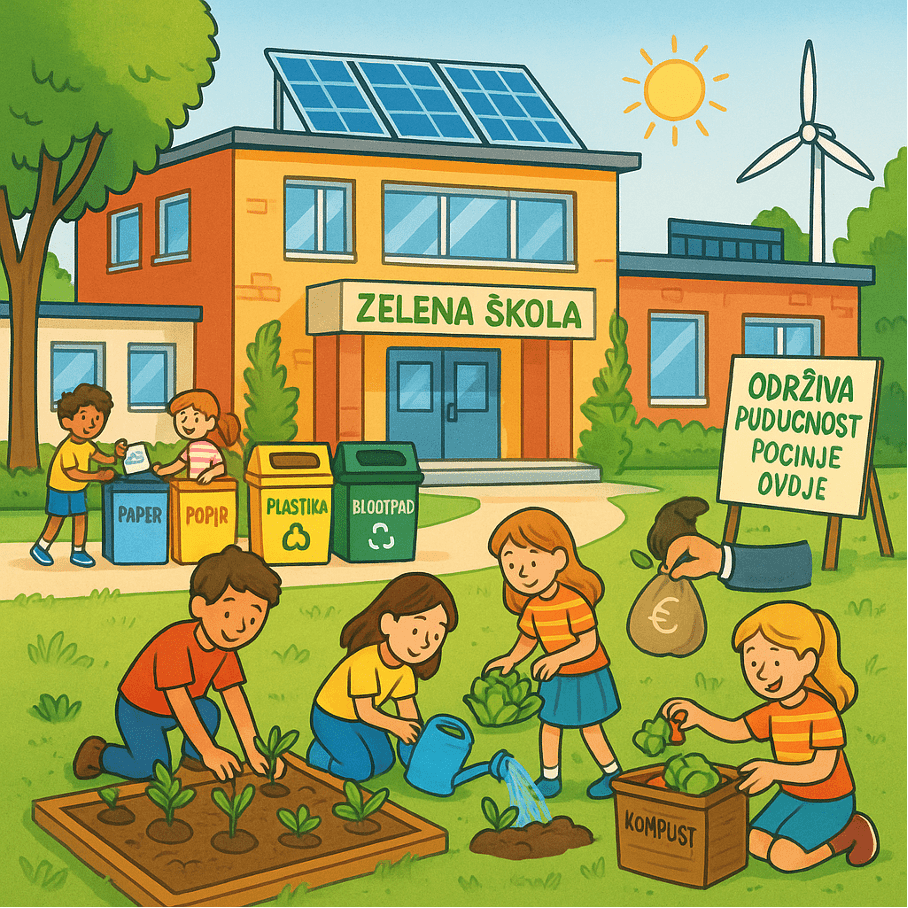
Green schools in Croatia are educational institutions that integrate ecological principles into their work, both through the curriculum and everyday practice. These schools aim to promote sustainability by actively involving students in projects related to ecology, energy savings, waste reduction, and environmental protection. Students not only learn about the importance of environmental conservation but also acquire practical skills they can apply in their daily lives.
Sustainability Education in Croatian Schools
Sustainability education has become an important part of the school curriculum in Croatia, with many schools implementing ecological projects that allow children to actively participate in preserving the environment. Green schools often teach children about the importance of recycling, energy efficiency, using renewable energy sources, and sustainable resource use. In addition, the lessons in these schools cover a wide range of topics, from nature protection and biodiversity to sustainable development and climate change.
The “Green School” Program in Croatia
One of the most well-known programs in Croatia promoting sustainability education is the “Green School” program. This program is part of the global Eco-Schools movement, which connects over 58,000 schools worldwide, with a large number of primary and secondary schools participating in Croatia. The goal of this program is to integrate sustainability into the education system and enable schools to become environmentally responsible institutions.
Schools participating in this program are focused on achieving specific ecological goals, such as reducing carbon dioxide emissions, saving energy and water, and waste management. To become certified as a Green School, a school must carry out a range of ecological initiatives, including:
- Establishing an Ecological Team to coordinate projects.
- Developing a School Action Plan that includes concrete sustainability goals.
- Involving students in activities such as tree planting, recycling, energy savings, and nature conservation.
Green schools in Croatia also organize various ecological actions, such as environmental cleanups, creating eco-gardens, and educating about sustainable transport.
Sustainable Projects in Schools
Several schools in Croatia have already implemented concrete projects that allow children to learn through practice. For example, at Eugena Kumičića Primary School in Rijeka, students are actively involved in a composting and recycling project. The school uses compost to enrich the soil in the school garden, teaching students how organic waste can be recycled and used for plant cultivation.
Additionally, at Ivana Mažuranića Primary School in Zagreb, students participate in a renewable energy project, where they explore the possibilities of using solar panels and wind turbines on school buildings. The school has installed small solar panels, and the children actively monitor energy production and learn about renewable sources.
Green Campuses and Infrastructure
School buildings also play an important role in sustainability. Many Croatian green schools have introduced energy-efficient heating and cooling systems and use environmentally friendly materials in construction and renovation. Additionally, energy consumption is reduced by introducing LED lighting and other energy-saving technologies.
Green campuses also include eco-gardens, where children grow their own produce and learn about sustainable food cultivation. These gardens not only improve the environment but also serve as a practical classroom where children learn about biological processes, recycling, and sustainable food production.
The Role of Green Schools in Society
Green schools in Croatia not only promote sustainability but also encourage broader societal change. Children who grow up in green schools often become promoters of sustainable behavior in their families and communities. For example, students may organize educational campaigns in their communities, carry out environmental cleanup actions, or encourage responsible waste management practices.
Schools also collaborate with local authorities, organizations, and non-governmental sectors to support ecological initiatives on a larger scale, thus creating a strong network that connects education, ecology, and the community.
In Croatia, green schools represent a step toward a future where education means not only acquiring knowledge but also behaving responsibly toward the environment. Through sustainability education, Croatian schools enable children to become conscious, responsible, and engaged citizens who will be drivers of positive change in society. These schools, by example, show how the education system can be a key force in the fight for a more sustainable and greener world.