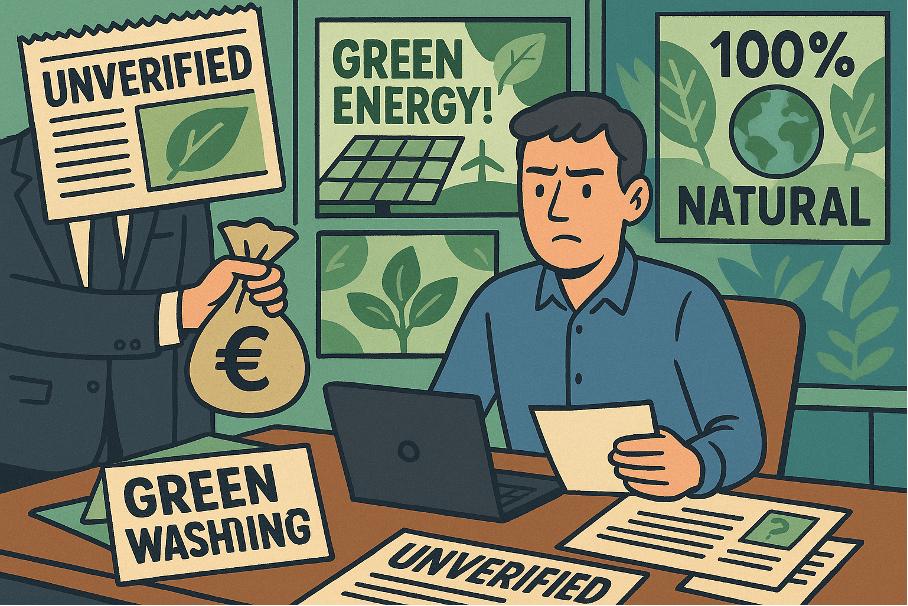
This can lead to greenwashing when companies make themselves look more eco-friendly than they really are spreading easily.
How does this happen?
1️⃣ Too many vague “eco” labels and phrases
We often see ads and articles using words like “green,” “eco-friendly,” or “natural,” but no one explains what those words actually mean. Many media don’t dig deeper to find out if these claims are true, and instead just repeat them as facts.
2️⃣ Not enough analysis and fact-checking
Media outlets in Croatia rarely do serious research to see if a company’s environmental efforts are real. Because of this, people can be fooled into believing companies are doing more for the environment than they really are. Media don’t always ask tough questions because they might not have the money or time for deep investigations, or because they don’t want to upset advertisers.
3️⃣ Missing certifications and standards
When media talk about “green” products, they often don’t mention specific certifications or standards that prove these products are truly sustainable. Without this info, it’s easy for consumers to get tricked. For example, something labeled “eco” or “natural” might not be eco-friendly at all, and media don’t always check where those labels come from.
Examples of greenwashing in Croatia and the media’s role
👉 Example 1: “Natural” products with questionable ingredients
Some brands in Croatia promote “natural cosmetics” that claim to be good for the environment but actually contain synthetic chemicals that don’t meet eco standards. Media often just repeat these marketing claims without checking what’s really inside the products. This makes people think they’re helping the environment when they’re not.
👉 Example 2: “Green” energy marketing
Some energy companies in Croatia say they offer “green” energy from wind or solar power. But in reality, only a small part of their energy comes from renewables. Media sometimes share these claims without checking how much green energy is actually used.
Why does this matter?
The media in Croatia play a big role in shaping how people think about the environment and what they buy. But many journalists and outlets don’t put enough effort into checking if something is truly eco-friendly, which lets greenwashing continue.
To fight greenwashing, we need stronger, more responsible journalism, more consumer education, and more transparency from companies. Consumers also have a role we need to think critically about marketing claims and look for real, verified certifications before we buy.
We all have a part to play in stopping greenwashing and protecting the environment for the future!
Source:
- Greenpeace Hrvatska – izvještaji i analize o ekološkim certifikatima i zelenim proizvodima.
- Udruga Potrošač – izvještaji o prevarama i greenwashingu u marketinškim kampanjama.