
Electric cars and green public transport are becoming super important for reducing CO₂ emissions and moving toward a cleaner future.
Electric cars in Croatia: trends, support, and challenges
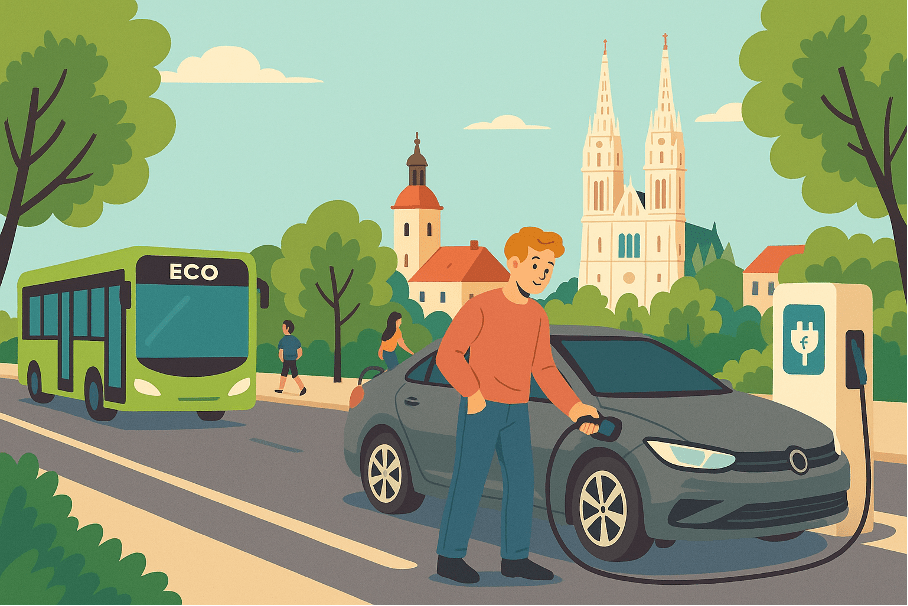
More and more electric cars are showing up on Croatian roads. Even though there are still some problems, like not enough charging stations and high prices, electric cars are a big step in the right direction. They don’t use fossil fuels and don’t produce emissions while driving, which helps Croatia lower its carbon footprint.
How Croatia supports electric cars
For several years, Croatia has been giving people financial help to buy electric cars. The Environmental Protection and Energy Efficiency Fund (FZOEU) gives grants to make it easier and cheaper to switch to electric.
In 2021, a new law about renewable energy and high-efficiency cogeneration brought even more incentives. This included support for zero-emission cars and for installing charging stations. Now, people and businesses can get free or discounted chargers, too.
According to the Croatian Bureau of Statistics and the Ministry of Economy and Sustainable Development, the number of electric cars in Croatia keeps going up. In 2020 alone, the number of registered electric vehicles increased by more than 50% compared to the year before. Even though there still aren’t that many compared to all cars, the trend is positive and growing.
Electric public transport: new projects and investments
Croatian cities are also investing in electric public transport to make cities cleaner. Zagreb, along with cities like Split and Osijek, has started using electric buses.
Electric buses in Zagreb
Zagreb is leading the way when it comes to green buses. In 2019, the Zagreb Electric Tram company (ZET) started running electric buses around the city, and they plan to get even more. These buses produce much less CO₂ and are quieter, which means better air and less noise in the city.
Support for green mobility
Thanks to EU funding, Croatia can buy more electric vehicles for public transport. Cities like Zagreb and Rijeka use these funds to switch to low-emission buses. For example, Rijeka plans to bring in new green buses soon to cut pollution and make life healthier for residents.
Challenges and what’s next
Some problems still need to be solved, like building more charging stations, lowering car prices, and bringing eco-friendly transport to rural areas.
But by keeping up the investment in green mobility, Croatia has a great chance to become a leader in sustainable transport in this part of Europe. This would really help reduce CO₂ emissions and protect the environment for future generations.
Sources:
- Fond za zaštitu okoliša i energetsku učinkovitost (FZOEU) – Poticaji za kupovinu električnih vozila
- Hrvatski zavod za statistiku – Statistike o automobilskom parku u Hrvatskoj
- Ministarstvo gospodarstva i održivog razvoja RH – Zeleni plan Hrvatske
- Zagreb Holding – Zeleni grad: Električni javni prijevoz
- ZET – Električni autobusi u Zagrebu
- Rijeka i EU fondovi za transport – Zeleni grad Rijeka
- Europska komisija – Infrastruktura za punjenje električnih vozila u EU
- Hrvatska elektroprivreda (HEP) – Punionice električnih vozila u Hrvatskoj