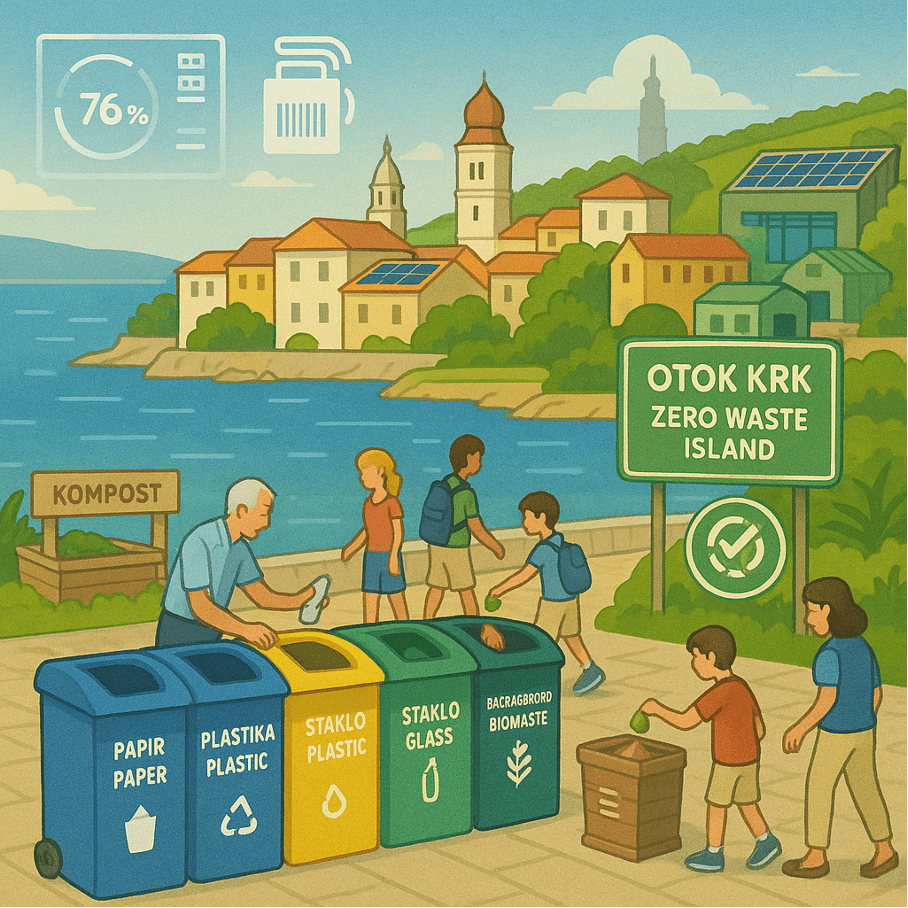
Krk is the first local government area in Croatia to get certified as “Zero Waste” by the Mission Zero Academy, which is part of the Zero Waste Europe network. This happened because of years of hard work to improve waste management and switch to a circular economy (which means reusing and recycling as much as possible instead of just throwing things away).
Krk achieved this just as the European Union is pushing countries to go green, through the European Green Deal and the Circular Economy Action Plan.
All seven local governments on Krk took part in this, with help from the NGO Zelena akcija (Green Action) and experts from Croatia and abroad.
Since 2021, Krk has been working on a big strategy that included:
- Reducing waste from the start (so there’s less to deal with later)
- Increasing recycling and composting
- Using digital tools to manage waste better
- Teaching people (locals and tourists) how to live more sustainably
Krk’s strategy fits perfectly with Croatia’s Waste Management Act, which says that by 2025, at least 55% of municipal waste must be collected separately. It also supports the national Waste Management Plan and EU rules like the Waste Framework Directive and the EU Circular Economy Package.
In the last 10 years, Krk has built a lot of new waste-related infrastructure, including:
- A modern sorting and composting plant
- Seven recycling centers around the island
- Digital tracking of waste with RFID systems (so they know exactly how waste is handled)
- Composting at home and collecting biowaste separately
All this work hasn’t just helped the environment it’s also made life better for people on the island. For example:
- New jobs have been created in waste management, education, and maintenance
- People are paying less to get rid of their waste because the system works better
- More people (including kids in schools and local businesses) now understand how to live sustainably
- Krk is becoming known as an “eco-island,” which attracts visitors who care about the environment
Today, Krk is a great example for other places in Croatia and Europe, especially in tourist areas where waste can become a huge problem because of so many visitors.
Krk isn’t just doing the minimum to follow the law it’s going above and beyond, setting new standards in sustainability and involving everyone in the community. For Krk, Zero Waste isn’t just a fancy label; it’s a promise to protect the environment, use resources wisely, and take care of future generations.
Sources:
- https://zelena-akcija.hr/en/news/krk-the-first-island-in-croatia-and-second-in-the-world-with-the-prestigious-zero-waste-certificate
- https://www.ponikve.hr/
- https://zerowasteeurope.eu/
- Waste Management Act of the Republic of Croatia – Official Gazette 84/21
- European Commission – Circular Economy Action Plan