This type of farming is all about protecting nature, supporting local food production, and staying connected to the environment and community.
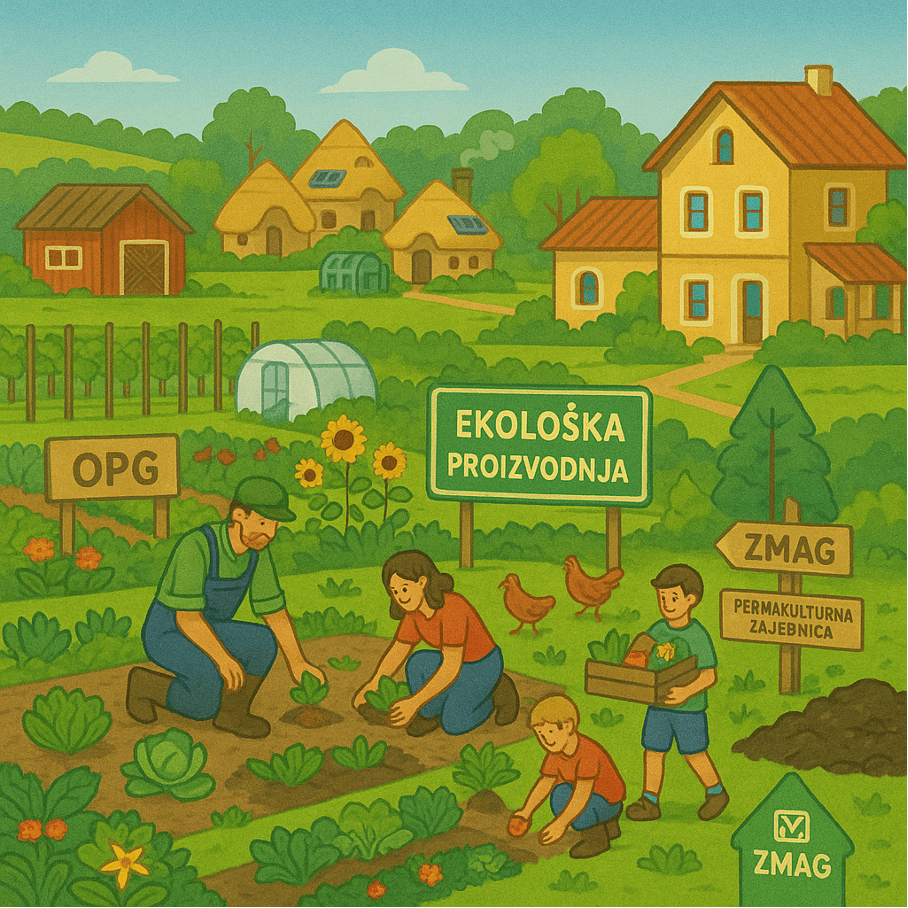
One of the main forces behind this green transformation are family farms, known as OPGs (short for Obiteljsko poljoprivredno gospodarstvo), and the growing number of eco-villages. These may be small, but they are powerful examples of how we can make rural areas greener and stronger.
According to the Croatian Ministry of Agriculture, in 2021, there were over 110,000 hectares of land used for organic farming in Croatia. That’s about 8.3% of all farmland! And the interest in organic farming keeps growing as more people want healthy, local, and ethically produced food.
The role of OPGs
OPGs are the backbone of Croatian farming there are over 160,000 of them registered! Many of these family farms focus on sustainable ways of growing food, like:
- rotating crops and using natural ways to fight pests,
- growing old, local plant varieties,
- using organic or integrated farming methods,
- making compost and using natural fertilizers.
More and more farms are also trying out agroecological and regenerative farming. This helps restore soil, improve biodiversity (meaning more different plants and animals), and make farms more resistant to drought and pests.
Examples like OPG Radošević in Lika (organic potatoes and grains) and OPG Štefanić in Međimurje (organic vineyards and agritourism) show that being eco-friendly can also be good business.
Croatia is also starting to see its first eco-villages small communities in the countryside that live in harmony with nature. They use permaculture, share land and resources, and rely on renewable energy.
A great example is the Vukomerić community, also called ZMAG’s Recycled Estate. It’s a real-life model of sustainable living and includes:
- growing local food without chemicals,
- building houses from natural materials like straw, earth, and wood,
- using solar panels, rainwater, and compost toilets to be energy-independent,
- sharing knowledge and teaching others how to live sustainably.
Eco-villages and permaculture communities don’t just show better ways to farm they also create social models based on teamwork, supporting local businesses, and learning together.
Of course, there are still challenges. Farmers often struggle with:
- getting their products to local markets,
- not having enough training or technical support,
- complicated paperwork for organic certification,
- unfair competition and low prices for their products.
But even with these problems, sustainable agriculture in Croatia — led by brave OPGs and eco-communities — is much more than just growing food in a better way. It’s about creating strong, self-sufficient, and resilient rural areas.
By mixing tradition, local knowledge, and new green ideas, Croatia can build a healthier food system and help Europe reach its climate goals.
Sources:
- Croatian Ministry of Agriculture – Organic Production Statistics 2021
- https://e-opg.eu/ekoloska-poljoprivreda-u-europi/
- https://www.zmag.hr/