Across Spain’s cities, a new culture of reuse is taking shape. Young people are organising workshops, social enterprises and neighbourhood programmes that keep materials in circulation and teach practical skills. From Barcelona’s zero-waste roadmap to Madrid’s reuse hubs and repair meet-ups, the shift is visible and local.
From waste to worth in Barcelona and Valencia
The design and ecology cooperative Makea Tu Vida works between Barcelona and the Valencia region. Its public programmes mix open design, collective making and reuse. Projects such as REHOGAR, an annual exhibition and meeting on open design and reuse, and school collaborations in l’Horta de València show how circular ideas become hands-on learning. The group documents these actions openly so other communities can adapt them.
Barcelona has also adopted a citywide Zero Waste Plan 2021–2027. The plan sets targets for prevention, selective collection and preparation for reuse, and links the circular economy with social inclusion. It includes door-to-door pilots, community composting and new jobs connected to reuse and repair. Clear metrics guide progress, from lowering residual waste per person to increasing textile collection.
Alongside policy, independent organisations help spread everyday practices. The Rezero foundation works with municipalities, schools and community groups to reduce waste at source and extend product lifecycles. Their resources explain how to move from recycling to prevention, and they support local pilots that young volunteers can join.
Madrid’s growing reuse and repair scene
In Madrid, the city is scaling ReMAD, a public reuse service that gives a second life to furniture, appliances and other household items. Residents can exchange or donate usable objects through new Reuse Centres, which prepare items for redistribution with the participation of social-inclusion enterprises. The aim is to divert bulky goods from landfill and normalise exchange and repair.
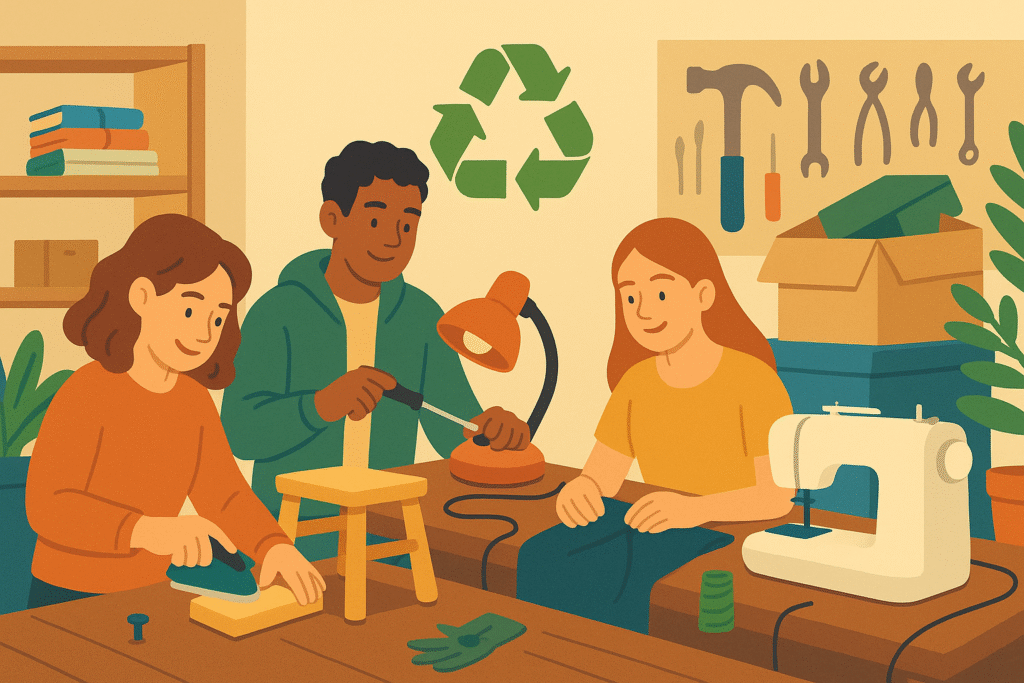
Repair culture is also entering public venues. Repair Café Madrid events invite neighbours to fix small objects together, from electronics to textiles, while learning basic maintenance and sharing tools. The city has promoted repair meet-ups within cultural spaces, and programmes highlight how keeping products in use reduces waste and builds community skills.
Madrid is framing these actions within its broader waste prevention and management strategy to 2030, which aligns with EU goals and emphasises circularity. Public documents outline selective collection, reuse channels and climate impacts, giving local groups a reference point for collaboration.
Food waste as a gateway for youth action
Circular cities are not only about plastics or furniture. In Catalonia, Espigoladors coordinates gleaning days where volunteers harvest surplus fruit and vegetables that would otherwise be lost. The social enterprise combines food waste prevention with training and job opportunities for people at risk of exclusion, and it shares methods that other territories can replicate. Many young volunteers start here and then apply the same logic of recovery to other materials.
What makes these actions credible
These initiatives share three traits that help cut through greenwashing. First, local ownership. City departments, cooperatives and neighbourhood groups design and run the work, and benefits remain close to the people involved. Second, transparent practice. From Makea Tu Vida’s public documentation to municipal plans with measurable targets, methods and outcomes are visible. Third, learning by doing. Workshops, repair days and gleaning sessions turn circularity into a social habit rather than a marketing claim.
For many young people, this is also about inclusion. Reuse centres in Madrid collaborate with social enterprises, while Espigoladors links food recovery with training. Rezero’s guidance helps schools and youth groups integrate prevention into daily routines. Circularity becomes a bridge between climate action, skills and fair opportunities.
Cities learning from their residents
The circular transition in Spain’s cities is moving because residents are involved. Policy sets direction, but it is the everyday work of collectives, teachers, repairers and volunteers that gives the transition momentum. When a class builds furniture from reclaimed materials, when neighbours repair instead of replace, or when volunteers recover food for community kitchens, waste turns back into value.
These stories show that circular cities are not a distant vision. They are built step by step, with open plans, shared tools and public spaces where people learn together.
Sources:
Makea Tu Vida, projects and reuse programmes: https://www.makeatuvida.net/ and REHOGAR overview: https://www.makeatuvida.net/rehogar-7-%C2%B7-diseno-abierto-y-reutilizacion/ Makeatuvida+1
Barcelona Zero Waste Plan 2021–2027: https://ajuntament.barcelona.cat/neteja-i-residus/en/presentation/waste/zero-waste-plan Ajuntament de Barcelona
Rezero foundation (zero-waste resources and projects): https://www.rezero.cat/en/ and zero-waste society explainer: https://www.rezero.cat/en/societat-residu-zero/
ReMAD reuse service, Madrid: https://www.madrid360.es/el-servicio-remad-se-amplia-para-dar-segunda-vida-a-muebles-y-electrodomesticos/ Madrid 360
Repair Café Madrid, public events: https://www.mataderomadrid.org/programacion/repair-cafe-madrid-0 and city repair day listing: https://www.madrid.es/portales/munimadrid/es/U-Nacional-Distancia-UNED/Repair-Day-
Espigoladors, food waste prevention and volunteering: https://espigoladors.cat/en/ and gleaning model: https://espigoladors.cat/en/gleanings/